Claude vs OpenAI: Where Each Model Wins in 2026
Claude vs OpenAI compared on real use cases: agentic work, code, writing, vision, cost, and refusal behaviour. Practitioner notes from shipping both in production.
By Matthew Clarkson · July 21, 2024
Updated May 2026. Refreshed for current models: Claude Opus 4.6, Claude Sonnet 4.6, Claude Haiku 4.5, GPT-4.1, GPT-4o, and OpenAI’s o-series.
If you want a model doing real work in your business rather than answering questions in a tab, this is what we build: custom AI assistants that operate your own systems, reading freely and writing only with approval.
This question gets asked by clients about once a week. It also gets typed into Google a lot, often in confused forms (“is claude open ai?”, “claude or openai”, “claude versus chatgpt”). The short answer is that Claude and OpenAI are different companies with different models, and which one wins depends entirely on what you are doing with it.
At Osher Digital, we are a Brisbane-based AI consultancy that ships production systems on both. We have deployed Claude-based agents (see our Claude agent guide) and OpenAI-based agents (see our ChatKit guide) for clients in healthcare, recruitment, finance, and professional services. This article is the practical comparison we wish we had two years ago when we were choosing.
The Short Answer
For agentic work, document processing, and writing tasks where instruction-following matters, Claude. For broad ecosystem support, multimodal work (especially voice and image generation), and the cheapest-per-token mid-quality tier, OpenAI. For code, it is closer than it has ever been; Claude Sonnet 4.6 is our default but GPT-4.1 is a real alternative and the o-series reasoning models are excellent for complex algorithmic work.
Most production workloads we ship use one of each. Claude does the agent work, OpenAI does the embedding and the occasional speech-to-text task, and we route specific jobs to whichever model produces the result the client cares about. There is no rule that says you must pick one.
The Companies and Their Models
Two separate companies with separate models. Worth saying clearly because the search query “is claude open ai” gets a lot of impressions.
Anthropic makes Claude. Founded 2021 by ex-OpenAI researchers including Dario and Daniela Amodei. Headquartered in San Francisco. The Claude product line in May 2026 is Claude Opus 4.6 (largest, slowest, most capable for hard reasoning), Claude Sonnet 4.6 (the workhorse, our default for almost everything), and Claude Haiku 4.5 (fastest and cheapest, good for high-volume classification and routing). Anthropic’s main consumer product is claude.ai. Their API and developer platform is Claude Platform.
OpenAI makes ChatGPT and the GPT family. Founded 2015. Same San Francisco. The current OpenAI lineup includes GPT-4.1 (the recent flagship), GPT-4o (multimodal real-time, good for voice), GPT-4o-mini (the cheap-and-fast tier), and the o-series (o1, o3, o4-mini variants) reasoning models that “think” before responding. ChatGPT is the consumer product. The API platform is the developer-facing offering.
Both companies offer Pro/Plus/Max consumer subscriptions (around $30 USD per month) with model access plus features like file upload, code execution, and (for OpenAI) image generation. Both offer enterprise tiers with data residency, SSO, and audit logging.
Where Claude Wins
Agent work. Tool use accuracy on the agents we have built is materially higher with Claude Sonnet 4.6 than with GPT-4.1 or the o-series. For a property management client running an agent that calls 11 different tools across a CRM, calendar, and email system, Claude picks the right tool in the right order roughly 96% of the time on our eval set. GPT-4.1 sits around 89%. The seven-point gap is the difference between an agent that ships and one that needs babysitting.
Long-context reasoning. Claude’s effective recall over a 200K-token context is the best we have measured. Drop a 50-page legal contract in and ask “where does the indemnity cap reset?” and Claude finds the right clause far more reliably than GPT-4.1 in our tests. OpenAI’s context windows have grown but the recall quality at long lengths still trails.
Writing that does not sound like AI. This is subjective and the gap has narrowed, but Claude’s prose is closer to readable human writing out of the box. GPT-4.1 has a recognisable cadence (the parallel three-item lists, the breezy hedging) that you have to prompt away. We use Claude for any client-facing draft generation by default.
Refusal calibration. Claude refuses dangerous things and complies with reasonable requests at a better calibrated rate. We have lost less time arguing with Claude about why we need to process a medical document than with the equivalent OpenAI workflow.
Coding agents. Claude Code, Anthropic’s CLI for coding work, is the agentic coding tool we use day-to-day. The combination of Sonnet 4.6’s tool use and a well-designed CLI gives genuinely useful pair-programming. OpenAI’s Codex equivalent has improved but lags.
Where OpenAI Wins
Voice and real-time multimodal. GPT-4o’s realtime voice API is in a class of its own. Claude does not have a comparable native voice model in May 2026. For any product where the user talks to the AI, OpenAI is the answer.
Image generation. DALL-E 3 (and the newer image models OpenAI ships through ChatGPT) cover the territory. Anthropic does not produce images. If your workflow needs image output, OpenAI or a separate provider like Stability or Midjourney.
Speech to text. Whisper is excellent and cheap. We use it for every transcription job we ship.
The cheap mid-tier. GPT-4o-mini is around 25% cheaper than Claude Haiku 4.5 per million input tokens. For high-volume classification or summarisation where the quality difference is small, the cost gap matters. We use 4o-mini for most invoice line-item classification work where we are processing millions of items.
Reasoning that benefits from thinking time. The o-series models trade latency for quality on hard problems. For complex math, multi-step planning, or scientific reasoning, o3 produces results we have not been able to match with single-pass Claude. Most business workflows do not need this. Some do.
Ecosystem. More tutorials, more SDKs, more third-party integrations are written for OpenAI than for Claude. The gap is closing fast (Anthropic shipped MCP, the Claude Agent SDK, and broader integrations) but if you are picking what your team learns first, OpenAI’s documentation surface is still wider.
Real Use Cases We Have Built
Concrete tasks, what we shipped, why.
Healthcare document classification (200 docs/day). Claude Sonnet 4.6. Tool-use accuracy and long-context recall mattered more than cost. Total spend: about $80 AUD per month.
Talent marketplace candidate scoring (~3000 candidates/day). Claude Haiku 4.5 for the bulk scoring pass, GPT-4.1 for the final shortlisting. Two-stage pipeline because Haiku is fast and cheap, GPT-4.1’s specific strengths in extracting structured comparison data fit the second stage. About $300 AUD per month total.
Property management AI assistant (Slack-based). Claude Sonnet 4.6 with the n8n AI Agent node and 11 tools. Claude’s tool selection accuracy was the deciding factor.
Customer support chat with voice option. Hybrid. GPT-4o handles the voice channel, Claude Sonnet 4.6 handles the text channel. Same knowledge base, same system prompt, different models for what each is best at.
Marketing content drafts. Claude Sonnet 4.6. Output reads cleaner. Less editing.
Image generation for social media. OpenAI’s image models. No competition from Anthropic in this space.
Meeting transcript summaries. Whisper for transcription, Claude Sonnet 4.6 for the summary. Best of both.
Pricing in 2026
API pricing per million tokens, USD, May 2026 (check the providers for current rates):
- Claude Opus 4.6: $15 input / $75 output
- Claude Sonnet 4.6: $3 input / $15 output
- Claude Haiku 4.5: $1 input / $5 output
- GPT-4.1: $5 input / $15 output
- GPT-4o: $2.50 input / $10 output
- GPT-4o-mini: $0.15 input / $0.60 output
- OpenAI o3: variable, around $20 input / $80 output
For an Australian business, multiply by roughly 1.55 to estimate AUD cost. Both providers offer prompt caching (typically 90% discount on cached input), batch processing (50% discount for non-real-time work), and enterprise tier discounts at volume.
For consumer use: Claude Pro and ChatGPT Plus are both around $30 AUD per month. Claude Max and ChatGPT Pro are both around $300 AUD per month. The pricing has converged.
Is Claude Open AI?
This question shows up often in search. The answer is no. Claude is made by Anthropic, a separate company from OpenAI. They are competitors. Anthropic was founded in part by former OpenAI researchers but has been independent since 2021. Different companies, different funding, different governance, different research priorities.
The confusion is understandable. Both names contain “AI”. Both are San Francisco research labs. Both ship chat products with similar pricing. The difference is real but easy to miss if you have not followed the field closely. If you are evaluating, treat them as two distinct vendors with two distinct sets of strengths and one clear shared category: frontier large language models.
Speed, Latency, Throughput
Hand-measured medians from our production workloads in May 2026 (your numbers will vary):
- Time to first token, Claude Sonnet 4.6: ~600ms
- Time to first token, GPT-4.1: ~400ms
- Time to first token, Claude Haiku 4.5: ~250ms
- Time to first token, GPT-4o-mini: ~200ms
- Output token throughput, Sonnet 4.6: ~85 tokens/sec
- Output token throughput, GPT-4.1: ~80 tokens/sec
For interactive UIs the time to first token is what you feel. Both providers have improved this materially in the last 12 months. Both offer prompt caching that drops the time-to-first-token by another 200-400ms when you are sending the same system prompt repeatedly.
The o-series and Anthropic’s “extended thinking” mode are different. They trade seconds of latency for better answers on hard problems. We do not use them for anything user-facing where wait time matters. We do use them for back-office reasoning tasks where 30 seconds is fine and the quality lift justifies it.
Safety and Refusal Behaviour
Both providers train their models to refuse certain content. The lines they draw are similar but not identical. In practice, Claude tends to be slightly more conservative on jailbreak attempts and slightly more permissive on edge cases of professional content (medical, legal). OpenAI tends to be the inverse.
For business workloads this rarely matters. Where it does matter is anything involving personal health information, legal advice, or content that gets close to sensitive categories. We have shipped client work where one provider refused a legitimate request that the other handled cleanly. The fix in those cases is a clearer system prompt that establishes the legitimate professional context. It is not specific to either provider.
For Australian businesses processing health data, both providers offer enterprise terms with no training on customer data, encryption in transit and at rest, and a Data Processing Addendum. Both process inference in the United States by default. AWS Bedrock and Google Vertex offer Claude in ap-southeast-2 (Sydney) for clients with strict data residency needs; OpenAI does not offer Sydney inference at retail tier.
Choosing: A Decision Framework
For a single task, ask in this order:
- Does it need voice input or output? OpenAI.
- Does it need image generation? OpenAI.
- Is it agentic with tool calling and a plan to execute? Claude.
- Is it long-document analysis or extraction over 50K+ tokens? Claude.
- Is it customer-facing prose generation? Claude.
- Is it a complex math, science, or planning problem where 30-second latency is fine? OpenAI o-series.
- Is it high-volume classification where cost per token matters more than quality? GPT-4o-mini.
- None of the above? Claude Sonnet 4.6 is the safe default for general business work.
For a whole organisation, do not pick one. Pick a default for the team to learn first (we usually recommend Claude for this), then use the other where its strengths matter. Both APIs are similar enough that switching for a specific task takes hours, not days. Vendor lock-in is not the real cost; the real cost is your team’s familiarity with the model’s behaviour, prompting style, and quirks.
Choosing the model is the easy part. Getting it into the workflows that actually run the business is the work. We start with a paid Business Process Audit — one day onsite, build-ready report you own — or book a short intro call if you want to talk it through first.
Frequently Asked Questions
Is Claude better than OpenAI?
For agent work, long-document analysis, and writing tasks where instruction-following matters, yes. For voice, image generation, and the cheapest mid-tier, no. The honest answer is that “better” depends entirely on the task. We use both in production and route specific workloads to whichever model handles them best.
What is Claude AI?
Claude is a family of large language models built by Anthropic. The product line includes Claude Opus (largest, for hard reasoning), Claude Sonnet (the workhorse for most tasks), and Claude Haiku (fast and cheap for high-volume work). Available via claude.ai for consumers and the Claude Platform API for developers, plus AWS Bedrock and Google Vertex for enterprise customers needing specific cloud regions.
Claude vs ChatGPT: which is better?
For chat, both are excellent. ChatGPT has voice, image generation, and a wider plugin ecosystem. Claude has cleaner writing, better long-document analysis, and more reliable tool use. For most general-purpose questions either will serve well. We pay for both and use them for different things.
How much does Claude cost vs OpenAI?
API pricing per million tokens in USD: Claude Sonnet 4.6 is $3 input / $15 output, GPT-4.1 is $5 input / $15 output. Claude is cheaper at the flagship tier. At the cheap mid-tier, GPT-4o-mini ($0.15 / $0.60) undercuts Claude Haiku 4.5 ($1 / $5). For consumer subscriptions, both Claude Pro and ChatGPT Plus are around $30 AUD per month with similar feature sets.
Is Claude part of OpenAI?
No. Claude is made by Anthropic, a separate company. Anthropic was co-founded in 2021 by former OpenAI researchers but has been independent ever since. The two companies are competitors with different governance and different research approaches. The naming similarity (both have “AI” in their products) causes regular confusion but they are distinct organisations.
Which model is best for coding?
Claude Sonnet 4.6 is what we use for day-to-day coding. The combination of Claude Code (Anthropic’s CLI for agentic coding) and Sonnet’s tool use accuracy makes it the most useful for real codebases. GPT-4.1 is competitive on raw code generation. The o-series models are excellent for complex algorithmic problems where you can wait 30 seconds for the answer. For interactive pair-programming, Claude Sonnet 4.6.
Can I use both Claude and OpenAI in the same product?
Yes, and we recommend it for any non-trivial product. Both APIs are similar enough that a small abstraction layer (a thin function that routes to the right provider based on the task) takes a few hours to write. We typically use Claude for agent work and writing, OpenAI for embeddings and speech-to-text, and route specific tasks based on what each model does best.
Should Australian businesses prefer Claude or OpenAI?
Both providers serve Australian customers well. For data residency requirements (regulated industries, sensitive personal information), Claude via AWS Bedrock in ap-southeast-2 is the cleanest path because it offers Sydney-region inference; OpenAI does not currently offer retail-tier Sydney inference. For everything else, the choice should follow the task, not the postcode. Anthropic and OpenAI both offer DPAs, no-training-on-customer-data terms, and SOC 2 / ISO 27001 attestations relevant to Australian businesses.
If you want help picking the stack and putting it into production on your systems, book a call. We're in Brisbane. Next step is usually the Business Process Audit.
Last updated on September 18, 2026
Free tool · 3 minutes
AI Readiness Assessment
Score how ready your business is for AI in a few minutes, with tailored next steps.
Continue Reading
View all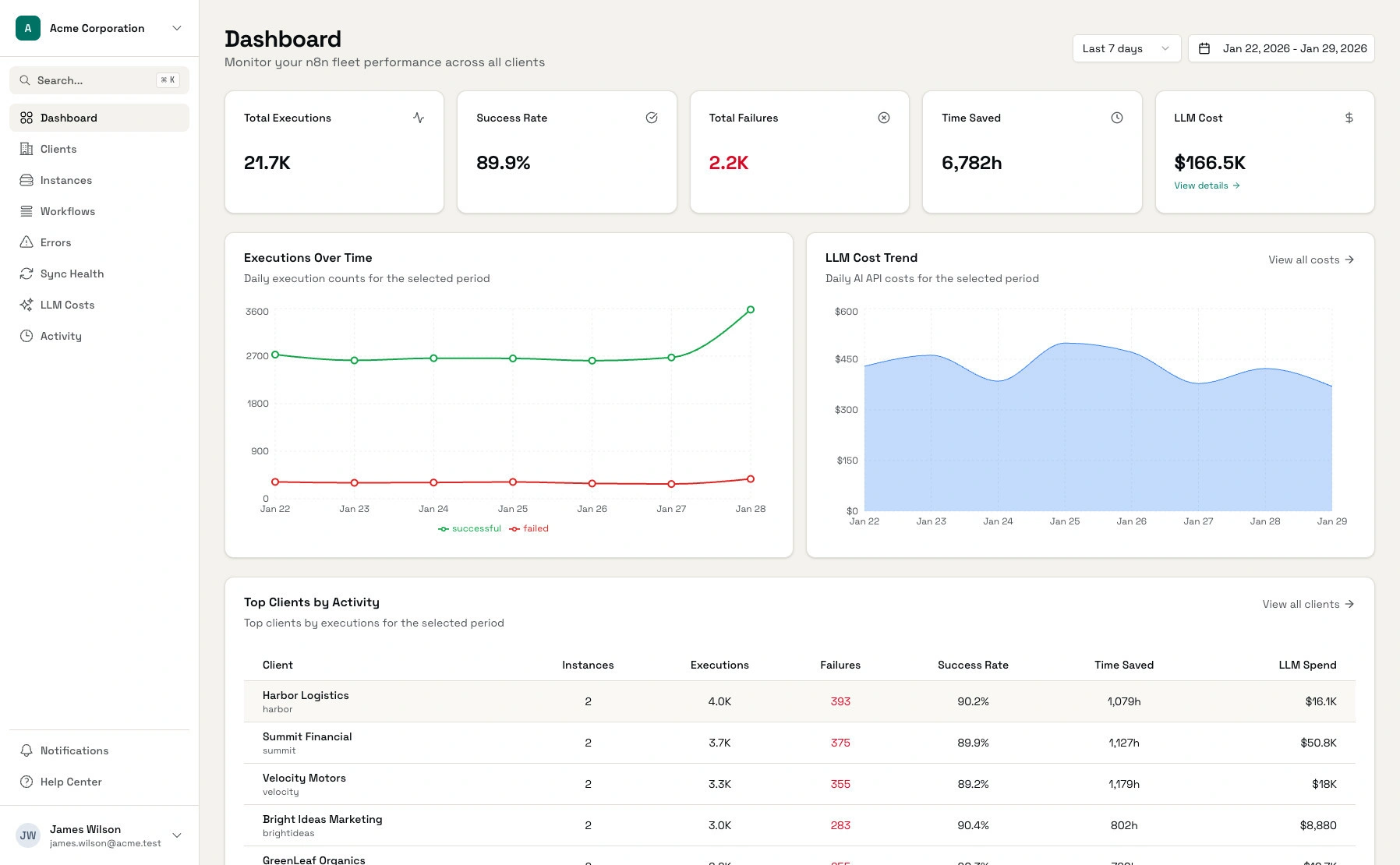
AI Agency Software
We have productized our own internal AI agency software – administrate.dev
Jan 31, 2026
AI in Mining Uncovered: How Smart Tech Boosts Safety and Profit
Imagine having a partner for your operations team who never sleeps. A partner who can sift through endless streams of data from your drills, trucks, and sensors, spotting tiny clues that signal a million-dollar problem is just around the corner. That’s the real value of AI in mining. It is not about sci-fi robots; it […]
Jan 30, 2026

A Plain English Guide to AI in Logistics
Artificial intelligence in logistics is about giving your supply chain a brain. It is not about self-aware robots taking over the warehouse floor, but rather about using smart systems to make your entire operation more efficient, predictive, and resilient. Think of it as the ultimate co-pilot for your logistics team. It is an assistant that […]
Jan 22, 2026
Sick of reading about automation?
Book a free 15-minute intro call. We’ll talk through what you’re trying to automate and whether we’re a good fit.