Vendor Management Best Practices: Risk, Performance, Renewals
Vendor management best practices that actually move outcomes: tier segmentation, performance contracts, renewal discipline, and what to skip entirely.
By Matthew Clarkson · August 1, 2025
Updated May 2026. Re-audited for on-page SEO. Primary keyword re-anchored across headings; FAQ schema added; authoritative outbound references added.
Vendor management best practices, as published by most consultancies, read as a list of things you should be doing. Tiering. Risk reviews. SLAs. KPIs. Onboarding checklists. The advice is mostly correct. It is also mostly useless if you have ever had to actually run a procurement function, because it skips the question of what to do first and where the leverage really is.
At Osher Digital, we are a Brisbane-based automation and AI consultancy. Vendor management is not our headline service, but we have spent enough time inside finance and procurement teams (automating invoice processing, vendor onboarding, and renewal workflows) to have an opinion about which of the standard vendor management best practices earn their cost and which are decoration. This guide is that opinion.
The short version: segmentation tells you where to spend attention, the performance contract turns vague expectations into evidence, and renewal discipline is the single most underrated lever in the entire function. Everything else is supporting structure. For a more orthodox treatment, the Chartered Institute of Procurement and Supply knowledge base is the canonical reference.
Why Most Vendor Management Best Practices Quietly Fail
The failure mode we see again and again is not dramatic. It is the slow drift. A contract gets signed, the relationship works for the first year, the renewal lands on someone’s desk while they are quarter-end-firefighting, and the auto-renewal clause kicks in at a 7 percent uplift on terms nobody renegotiated. Three years later you are paying 28 percent more than market for a service that quietly stopped scaling.
The other failure mode is concentration risk. A finance team we worked with had built 71 percent of their reconciliation workflow on a single mid-market vendor whose roadmap was no longer aligned with the platform. When that vendor was acquired, they had nine months to migrate, which is not enough time for a system that took three years to embed.
Neither of these problems shows up on a generic vendor risk scorecard. They show up when someone has actively been paying attention to the portfolio.
Vendor Management Best Practice 1: Tier-Based Segmentation
You cannot manage 200 vendors the way you manage 10. Segmentation is the first practice for a simple reason: it tells you where to spend your limited attention.
The three-tier model is the one we keep coming back to with clients, because four tiers turns into a debate about whether something is a 2 or a 3, and two tiers loses the middle.
Tier 1: Strategic
High impact, high switching cost, embedded in your operations. Your core ERP, your primary cloud provider, the integrator who knows where the bodies are buried. Losing one of these vendors is a six-to-eighteen-month recovery project. Strategic vendors get quarterly business reviews, named relationship owners on both sides, and you read their financial filings.
Tier 2: Important
Material spend or business impact, but substitutable within a quarter. Payroll, mid-tier SaaS, specialist contractors you bring in for projects. Six-monthly check-ins, contracted SLAs, an actual renewal conversation rather than an auto-roll.
Tier 3: Transactional
Low spend, low risk, easily replaced. Office supplies, generic software seats, one-off services under $5,000 AUD. Annual sweep at most. Automate the procurement workflow and stop spending senior procurement time on them.
The segmentation criteria that work in practice are spend, switching cost, and operational dependency. Not strategic importance in the abstract. A coffee supplier is strategically unimportant. A specialist contractor with the only person who understands your tax provisioning logic is not, regardless of their invoice size.
Reclassify annually, and any time a relationship changes character. Vendors move tiers when their product becomes more or less embedded. A new SaaS tool starts at Tier 3 and earns its way up.
Vendor Management Best Practice 2: The Performance Contract
SLAs and KPIs are not the same thing. SLAs are what the vendor commits to in the contract. KPIs are what you actually measure to decide whether you are getting value. Generic vendor management advice treats them interchangeably, which is how you end up with five-page SLA appendices that nobody references and three KPIs that nobody collects data for.
The performance contract is the document (or the section of the master agreement) where the SLAs and the KPIs meet a measurement plan and consequences. It answers four questions explicitly.
- What does good look like? Specific numbers tied to outcomes you care about. Uptime is fine for infrastructure. For a recruitment contractor it might be time-to-shortlist and offer-to-acceptance ratio.
- Who collects the evidence? If the answer is “the vendor”, you are reading their self-report. Some metrics genuinely have to come from the vendor (their own internal uptime monitoring), but the ones you care about most should be measured from your side.
- What is the review cadence? Monthly for Tier 1, quarterly for Tier 2, annually for Tier 3.
- What are the consequences? Service credits with real teeth (5 percent of monthly fees for missing the primary SLA is real; 0.5 percent is symbolic), termination triggers for repeated breach, and renewal-pricing implications for sustained underperformance.
The single biggest contracting mistake we see is targets without measurement plans. “99.5 percent uptime” with no clause specifying how uptime is calculated, whose monitoring is authoritative, what counts as an outage, or what the credit mechanism looks like is worth less than the paper it is printed on.
For more on building the measurement layer underneath this, our notes on measuring success in automation initiatives covers a lot of the same principles applied to internal teams.
Vendor Management Best Practice 3: Renewal Discipline
This is the most underrated practice in vendor management, and the one we end up reorganising for clients most often.
The default mode for most organisations is reactive. The renewal notice arrives 60 days out, somebody panics, the existing vendor offers a “loyalty discount” of 3 percent off the published uplift, the renewal gets signed, and the cycle resumes. The vendor knows this is how it goes and prices accordingly.
The disciplined version looks like this. A renewal calendar lives somewhere visible, with reminders firing 180, 120, 90, and 60 days out depending on the tier. Tier 1 renewals get a structured prep: usage data pulled from the last 12 months, a benchmark of the published rate against what competitors are quoting, and a written internal position on whether to renew, renegotiate, or replace. That position is signed off by someone with authority before any conversation with the vendor.
The savings we see from doing this properly are not small. On a Tier 1 SaaS renewal where the auto-uplift was 7 percent, a six-month prep that included a credible threat to move to a competitor produced a 12 percent reduction on the previous year’s rate. The same vendor would have happily taken the 7 percent uplift.
Three things make this practice work in practice rather than on paper:
- Renewal owners are named, and they are not the people who use the service day-to-day (those people are conflict-averse on the renewal because they have to keep working with the vendor).
- The auto-renewal clause gets reviewed at signing and again 180 days before the auto-renewal window opens. If you have to give 90 days notice to prevent auto-renewal, your calendar reminder fires at 120 days.
- You always have a credible alternative researched before you walk in. The vendor knows whether you have one within the first five minutes of the conversation.
Vendor Management Best Practices for Risk Monitoring
The textbook says continuously monitor financial health, cybersecurity posture, regulatory compliance, and operational resilience. In practice, doing that across 200 vendors is impossible and doing it across 20 strategic ones is expensive.
What works is risk monitoring sized to tier, and a clear definition of which risks you actually care about.
For Tier 1 vendors we recommend:
- Financial health. Quarterly check of public filings, ASIC records for Australian vendors, and a Dun & Bradstreet or Creditsafe pull. If they are private and material to you, ask for unaudited financials annually as a contractual right.
- Cybersecurity. Current SOC 2 Type II report or ISO 27001 certification on file, with annual review. Specific evidence of breach response procedures. If they hold your customer PII, you also want their incident notification clause in writing with hours, not days.
- Concentration. What percentage of their revenue do you represent? If you are over 20 percent, you have leverage but also exposure. If you are under 1 percent, your priority in their roadmap is low.
- Data residency. Particularly for Australian organisations handling personal information under the Privacy Act, you want to know which jurisdictions process and store data, and whether the answer has changed. The OAIC’s Australian Privacy Principles guidance is the canonical reference for APP 8 cross-border disclosure.
For Tier 2 we do an annual review of the same criteria but at lower depth. For Tier 3 we do a regulatory and security baseline at onboarding and re-check only when something changes.
If you want a fuller treatment of the data side of this, our piece on data quality management covers some of the same ground from the inside-out direction.
Onboarding: The Part Most Teams Do Too Fast
Onboarding is when you have maximum leverage. You can negotiate terms, set up the measurement plan, lock in the renewal cadence, and integrate properly. After signing, leverage tilts toward the vendor.
The onboarding checklist we use covers six things:
- Master agreement and SOW , with the performance contract section explicit (not buried).
- Security and compliance pack filed: current certifications, DPA, sub-processor list, incident response procedures, evidence of last penetration test.
- Financial and operational due diligence proportional to tier. For Tier 1 this is structured. For Tier 3 it is a credit check and an ABN lookup.
- Integration plan if the vendor connects to internal systems. APIs documented, secrets management agreed, monitoring in place from day one.
- Internal kickoff with the people who will actually use the service. They know edge cases the procurement conversation skipped.
- Renewal calendar entry with reminders set before the contract is even signed.
The piece that gets skipped most often is the integration plan. A SaaS that does not integrate cleanly with your identity provider, your monitoring, and your offboarding workflow becomes a manual operational burden that grows linearly with your headcount. If your automation platform cannot reach the vendor’s API, you will be doing data entry against it forever.
The Portfolio Review
Once a year, you sit down and look at the entire vendor portfolio as a whole, not as 200 individual relationships. The questions to answer:
- What did we spend with each vendor? Which spend was budgeted and which crept in via shadow IT?
- Where is concentration risk hiding? Three different vendors all running on the same underlying infrastructure provider still counts as concentration.
- Which vendors are we still using but no longer need? The dead-tail SaaS subscription problem. Two seats on something nobody has logged in to for six months.
- Where could we consolidate? Three overlapping tools for the same job is two more contracts to manage than is necessary.
- Where are we under-invested? A Tier 1 relationship that is being managed at a Tier 3 level of attention is risk waiting to surface.
For a finance client of ours, the first portfolio review surfaced $94,000 AUD in annual spend across five overlapping or zombie subscriptions that nobody had questioned in three years. The review took two days. That is a fairly typical first-time result.
Centralised Tooling: Needed, but Overrated
You will read in most vendor management content that you need a centralised vendor management system: SAP Ariba, Coupa, Vendr, Productiv. They are not wrong, but the tooling is downstream of the practices, not upstream.
We have seen plenty of teams buy a $60,000 AUD per year procurement platform and then continue managing renewals out of someone’s Outlook calendar. The platform did not change the practice; the practice change had to come first.
For most mid-market Australian businesses, the realistic tooling stack is:
- Contract repository. Even a structured shared drive works at the start. The signed agreement, the SOW, the DPA, and the renewal calendar live in one place per vendor.
- Renewal calendar. A shared calendar with named owners and 180/120/90/60-day reminders. This is the single highest-ROI tool in the stack and it can be free.
- Spend visibility. Your accounting platform plus a tag or category convention is usually enough. Vendr-style spend management platforms become worth the cost above roughly $2 million AUD in SaaS spend.
- Risk register. A working spreadsheet that scores each Tier 1 vendor across financial, security, operational, and concentration risk, reviewed quarterly. A dedicated GRC tool is justified when you are dealing with regulatory exposure under APRA CPS 234 or similar.
Where automation pays off is in the workflow around vendor onboarding, invoice handling, and renewal alerts. We have built automation flows for clients that pull contract end dates into the renewal calendar automatically, flag missing security certifications, and route invoices through a three-way match before payment. That is a fraction of the cost of full procurement suites.
If you want to talk through what would actually move the needle for your portfolio, book a call and we will work through it.
When Vendor Management Best Practices Are Overkill
If you are a 15-person business with 20 vendors and $400,000 AUD in total third-party spend, you do not need any of the procurement platforms, you do not need a vendor management framework, and you almost certainly do not need a procurement function.
What you do need:
- A list of every recurring vendor and their renewal date, in one place. Spreadsheet is fine.
- A rule that nothing renews without someone consciously deciding to renew it.
- An annual review of the list to catch zombie subscriptions.
The full framework starts paying for itself around the point where you have 80 to 100 vendors, more than one person managing procurement, or regulatory exposure that demands documented governance. Below that, the framework will slow you down more than it protects you.
Frequently Asked Questions
What are the most important vendor management best practices?
Three carry most of the weight: tier-based segmentation so you spend attention where it matters, performance contracts with real measurement and consequences, and renewal discipline so contracts do not drift on auto-pilot. The rest is supporting structure for these three.
What are the benefits of vendor management?
Direct cost savings on renewals (a disciplined renewal process saves 5 to 15 percent compared to passively accepting uplifts), reduced concentration and operational risk, faster onboarding for new suppliers, and visible portfolio data when you need to make strategic decisions. The benefit that does not show up in cost terms is reduced firefighting when a vendor underperforms or exits.
How do you conduct vendor due diligence?
Match the depth to the tier. For Tier 1 vendors that touch sensitive data or core operations: financial health (filings, credit check, ASIC), cybersecurity (SOC 2 Type II or ISO 27001, breach history, incident response procedures), operational resilience (business continuity plan, evidence of recovery testing), and regulatory fit (compliance with relevant frameworks like APRA CPS 234 or the Privacy Act). For Tier 3 vendors, an ABN lookup and a credit check is enough.
How much does a vendor management system cost?
Mid-market options like Vendr, Productiv, or Tropic typically land between $25,000 and $80,000 AUD per year depending on portfolio size and features. Enterprise platforms like SAP Ariba and Coupa run six figures and require implementation engagements on top. Below roughly $2 million AUD in annual third-party spend, a structured shared drive plus a renewal calendar gives you 80 percent of the benefit at zero software cost.
What is tier-based vendor segmentation?
Tier-based segmentation classifies vendors by their operational impact and switching cost, not by spend alone. Tier 1 (strategic) vendors are embedded in operations and hard to replace. Tier 2 (important) are material but substitutable within a quarter. Tier 3 (transactional) are low-risk and easily swapped. Different tiers get different review cadences, different contractual rigour, and different management attention.
How often should you review vendor contracts?
Tier 1 contracts get reviewed quarterly against the performance contract and 180 days before any renewal window. Tier 2 contracts get a half-yearly check-in and a 90-day renewal prep. Tier 3 contracts are reviewed annually unless something specific changes. The point of the cadence is not to manufacture meetings, it is to make sure no contract auto-renews without a conscious decision.
How do you handle vendor performance issues?
The contract should already specify what counts as a performance issue, how it is measured, and what the consequence is. The conversation flow then runs: data first (here is what we measured), root cause discussion, agreed remediation plan with a date, and follow-through. If the same issue recurs after remediation, escalate to the contractually defined consequence, whether that is service credits, a termination notice, or a non-renewal letter. The reason this sequence works is that it is grounded in evidence, not opinion.
Can vendor management be automated?
Parts of it, yes. Renewal alerts, invoice three-way matching, onboarding workflows, certification expiry tracking, and spend categorisation all automate well with platforms like n8n or workflow tools layered over your accounting and contract systems. What does not automate is the judgement: deciding whether a vendor is performing, whether to renegotiate, whether to consolidate. Treat automation as removing the administrative load so your procurement people can do the thinking work.
If you are looking to bring more rigour to vendor management best practices without buying a six-figure procurement platform, get in touch. We help Australian businesses build the workflow automation around onboarding, renewals, and invoice handling that makes the human side of vendor management actually tractable.
Last updated on July 1, 2026
Free tool · 2 minutes
Automation ROI Calculator
See what a manual process is really costing you, and the payback on automating it.
Continue Reading
View all
Rented software was always a compromise. AI has ended it.
Off-the-shelf software made sense when custom cost $250,000. AI-assisted development changed the maths. Why we now build software around the business, AI-first, and connected to Claude and ChatGPT, starting at $15k.
Aug 6, 2026
n8n Outlook Automation: Where the Node Stops and Graph Begins
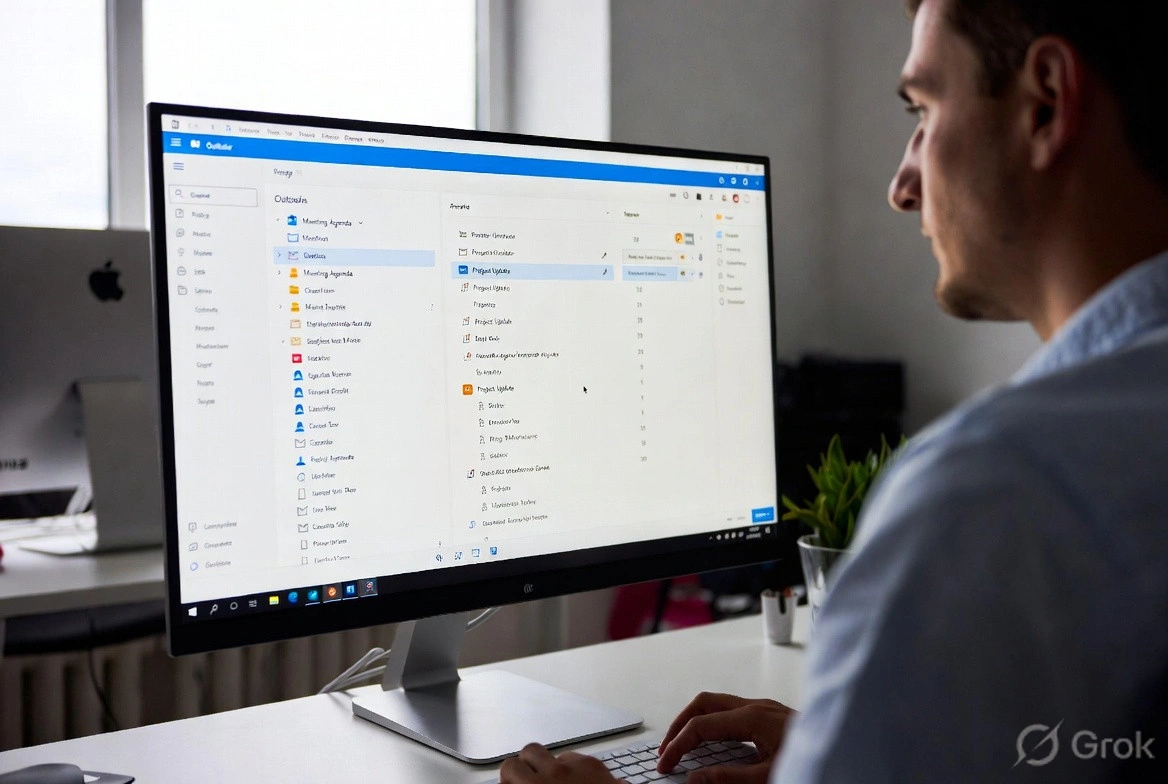
n8n Outlook automation breaks in predictable places: subfolders, attachments, shifting email IDs, plus the Graph API workarounds we run in production.
Mar 16, 2026

What Is a Workflow? Definition, Parts, and What Breaks
A workflow is the repeatable set of steps that takes a task from start to finish. Here is what a workflow is made of, and the parts that quietly break.
Mar 1, 2026
Sick of reading about automation?
Book a free 15-minute intro call. We’ll talk through what you’re trying to automate and whether we’re a good fit.