Intelligent Agents in AI: From Reflex to Learning
What an intelligent agent is in AI: the formal definition, the four components, the five agent types from simple reflex to learning, and how it differs from an AI agent.
By Matthew Clarkson · September 25, 2025

Updated May 2026. Rewritten as a clear reference on the formal intelligent agent model, the five agent types, and how the textbook term maps to the AI agents people build today.
An intelligent agent is one of those terms that means something precise in a textbook and something fuzzier in a product pitch. If you are studying AI, “intelligent agent” is a formal model with a specific definition and a taxonomy of types. If you are buying software, it gets used loosely for anything that automates a task. This guide sticks to the precise version, because the precise version is the one that actually helps you reason about how these systems work.
We are Osher Digital, an automation and AI consultancy. We build agents for a living, which means we spend a lot of time translating between the academic definition and what a working system needs to do. This piece covers the definition properly, walks the four components and the five agent types, and then maps the classroom term onto the AI agents people deploy in 2026. For the build-focused companion, see what an AI agent is in practice; this one stays on the concept.
What Is an Intelligent Agent?
The standard definition comes from Stuart Russell and Peter Norvig in Artificial Intelligence: A Modern Approach: an intelligent agent is anything that can be viewed as perceiving its environment through sensors and acting upon that environment through actuators. That is deliberately broad. A thermostat fits it. So does a self-driving car. So does a person.
What separates an intelligent agent from an ordinary program is the loop between perception and action. A calculator does exactly what you type and has no awareness of anything else. An intelligent agent observes its surroundings, decides what to do based on those observations, acts, and then perceives the result of its action, which feeds the next decision. That perceive-decide-act cycle, running toward a goal, is the whole idea.
The other defining trait is that an intelligent agent is goal-oriented. It is not just reacting at random. Every action is chosen because it moves the agent closer to an objective: a clean inbox for a spam filter, a destination for a navigation app, a solved query for a support bot. The intelligence is in selecting actions that serve the goal, not in any single clever output.
The Four Components of an Intelligent Agent
Every intelligent agent, simple or sophisticated, is built from the same four parts. Understanding them is the fastest way to reason about any agent you encounter.
Sensors are how the agent perceives. For a self-driving car, cameras and lidar. For a spam filter, the code that reads an incoming email. For a monitoring agent, the feed of metrics it watches. Without sensors the agent is blind and has no input to act on.
Actuators are how the agent acts on its environment. The steering and brakes in the car, the function that moves an email to a folder, the call that scales up a server. Actuators turn a decision into a real effect, closing the loop from perception to outcome.
The agent function is the decision-making logic that maps what the agent perceives to what it does. It is the part people mean by “intelligence”. In a simple agent it is a set of if-then rules. In an advanced one it is a learned model. Either way, it is the mapping from perceptions to actions.
The environment is the world the agent operates in, which sets the context and the limits of what it can perceive and do. For a chess engine it is the board. For a logistics agent it is the network of roads and depots. Defining the environment precisely is half the work of designing an agent, because it determines what counts as a valid perception and a valid action.
The Five Types of Intelligent Agents
The classic taxonomy runs from the simplest reactive agent to the self-improving one. Each type adds a capability the previous one lacked, and knowing where a system sits tells you what it can and cannot do.
Simple reflex agents act only on the current perception with a fixed rule: if condition, then action. No memory, no model of the world. A basic thermostat that switches on at a set temperature is the textbook case. Reliable for narrow jobs, useless the moment the right action depends on history.
Model-based reflex agents keep an internal model of how the world works, so they can act sensibly even when they cannot see everything at once. A car that understands brake lights mean the vehicle ahead is slowing, rather than just reacting to the lights, is using a model. The model fills in what the sensors miss.
Goal-based agents evaluate which available action moves them toward an explicit goal, which may mean planning several steps ahead. A navigation app choosing between routes is goal-based: it is not reacting, it is comparing paths against the objective of reaching a destination.
Utility-based agents go further and weigh the quality of different ways to reach the goal, not just whether the goal is reached. The navigation app that balances speed, tolls, and traffic to recommend the best route, rather than merely a valid one, is optimising utility. It is choosing among successes, not just finding one.
Learning agents improve through experience, updating their own decision logic based on the results of past actions. A recommendation system that gets better at predicting your taste the more you use it is the everyday example. This is the type that most resembles the large-model agents being built today, which learn from data rather than being fully hand-coded.
Intelligent Agent vs AI Agent vs Chatbot
This is where the terminology tangles, so let us untangle it. “Intelligent agent” is the academic umbrella term for any perceive-decide-act system, going back decades before the current AI wave. “AI agent”, as people use it in 2026, usually means a specific modern thing: a large language model placed in a loop where it can call tools, observe results, and decide its next step. An AI agent is a kind of intelligent agent, specifically a learning-type one built on a foundation model.
A chatbot sits below both. A plain chatbot responds to messages and stops. It does not take action across systems or pursue a goal through multiple steps. The moment a system starts reading data, deciding, and acting on its own, it has crossed from chatbot into agent territory. We draw that line in detail in how autonomous agents differ from workflows.
The practical payoff of keeping these straight: when a vendor calls something an “intelligent agent”, ask which type it actually is. A glorified if-then rule set is a simple reflex agent wearing a fancier name. A model in a tool-using loop is genuinely a learning agent. The label is the same. The capability is not.
How the Agent Function Makes Decisions
The agent function is where the design effort goes, because it is the mapping from perception to action. In a simple reflex agent it is a lookup table or a short list of rules. In a modern learning agent built on a model, it is the model itself, prompted with the current state and a description of the tools it can use, returning a decision about what to do next.
In our experience building the modern kind, the quality of the agent function depends far more on how you describe the available actions than on raw model power. Clear, well-named tool descriptions can lift an agent’s decision accuracy dramatically. We have measured tool-selection accuracy moving from the high seventies to the mid nineties on the same model purely by rewriting the tool descriptions. The “intelligence” is partly in the model and partly in how carefully you define its world, which is exactly what the academic framing predicts: the environment definition matters.
Frameworks help structure this for the model-based variety. If you are looking at how the agent function gets assembled in practice, our explainer on what LangChain is and when to use it covers one common option and its tradeoffs.
Where Intelligent Agents Show Up in Real Systems
The taxonomy is not just classroom theory. It maps directly onto systems running right now. Spam filters and smart thermostats are reflex agents. Navigation and logistics routing are goal- and utility-based agents weighing live data. Fraud detection systems are learning agents that build a model of normal behaviour and flag deviations.
In the work we ship, the learning-agent type does the heavy lifting. We have built a recruitment matching agent that reads applications, decides which to advance, and routes them, cutting a 30-minute manual step to seconds. We have built support triage agents that read an inbound message, decide its category and urgency, and act accordingly. In each case the academic structure is right there: sensors reading the input, an agent function deciding, actuators taking action across systems, all inside a defined environment.
The common thread, and the reason the formal model is worth knowing, is that it forces you to be precise about what the agent perceives, what it can do, and what goal it serves. Vague answers to those three questions are the root of most agents that disappoint in production.
Building an Intelligent Agent in 2026
If you are moving from understanding the concept to building one, the modern path is a learning agent on top of a foundation model. The shape is the same four components: the model and its prompt are the agent function, the tools you give it are the actuators, the data you feed it is the sensor input, and the systems it touches are the environment.
Two pieces of practical advice from doing this repeatedly. First, scope the environment tightly. An agent with a narrow, well-defined set of actions is more reliable than one with a sprawling toolset, every time. Second, instrument it. Log what it perceived, what it decided, and what it did, because when an agent behaves oddly you need to reconstruct its reasoning. The build discipline is covered in our AI agent development work, and if you want to talk through whether your problem actually needs an agent, you can book a call.
On cost, a focused production agent in Australia typically runs $30,000 to $120,000 AUD to build, with monthly running costs from a few hundred to a few thousand AUD depending on volume and which model does the work. That is a real project, not a weekend prototype, which is why the next section matters.
When You Don’t Need an Intelligent Agent
The honest counterpoint: a lot of problems labelled as needing an intelligent agent do not. If the task is a fixed sequence of steps with no real decision in it, you need a workflow, not an agent. Wrapping a deterministic process in a model that “decides” each step adds cost, latency, and a new way to fail, for no benefit.
Reach for an agent only when the path genuinely branches based on what the system observes, when the next action cannot be known in advance. If you can draw the full flowchart up front, build the flowchart. The agent earns its complexity precisely when you cannot draw it, because the decision depends on inputs you will only see at runtime. That distinction saves a lot of wasted budget.
Frequently Asked Questions
What is an intelligent agent in AI?
An intelligent agent is anything that perceives its environment through sensors and acts on it through actuators, in the Russell and Norvig definition. What makes it intelligent is the perceive-decide-act loop run toward a goal, choosing actions that move it closer to an objective rather than simply executing fixed instructions.
What are the four components of an intelligent agent?
Sensors that perceive the environment, actuators that act on it, the agent function that maps perceptions to actions, and the environment itself that provides the context and limits. Every intelligent agent from a thermostat to a self-driving car is built from these same four parts.
What are the five types of intelligent agents?
Simple reflex agents act on the current perception with fixed rules. Model-based reflex agents keep an internal model of the world. Goal-based agents plan toward an explicit objective. Utility-based agents weigh the quality of different ways to reach it. Learning agents improve from experience. Each type adds a capability the previous one lacks.
Is an intelligent agent the same as AI?
No. Artificial intelligence is the broad field of study; an intelligent agent is a specific application of it. Every intelligent agent is an example of AI at work, but AI as a field also covers models, theories, and systems that are not agents. The agent is one product of the wider discipline.
What is the difference between an intelligent agent and an AI agent?
Intelligent agent is the academic umbrella term for any perceive-decide-act system. AI agent, in current usage, means a specific modern type: a large language model in a loop that calls tools, observes results, and decides its next step. An AI agent is a kind of intelligent agent, specifically a learning agent built on a foundation model.
What is the agent function in AI?
The agent function is the decision-making logic that maps the agent’s perceptions to its actions. In a simple agent it is a set of if-then rules or a lookup table. In a modern learning agent it is the model itself, prompted with the current state and the tools available, returning the next action to take.
How much does an intelligent agent cost to build?
A focused production agent in Australia typically runs $30,000 to $120,000 AUD to build, with monthly running costs from a few hundred to a few thousand AUD depending on volume and which model does the work. Simple reflex-type automations cost far less, but the model-based learning agents people usually mean are a real project.
Do I need an intelligent agent or a workflow?
If you can draw the full flowchart of the task up front, build a workflow, not an agent. An intelligent agent earns its extra cost and complexity only when the path genuinely branches on what the system observes at runtime, so the next action cannot be known in advance. Most tasks labelled as needing an agent are actually workflows.
If you understand the concept and want to know whether your problem genuinely calls for an intelligent agent or just a well-built workflow, get in touch with our team. We are based in Brisbane, we build both, and we will give you a straight answer about which one your problem needs.
Last updated on July 1, 2026
Free tool · 3 minutes
AI Readiness Assessment
Score how ready your business is for AI in a few minutes, with tailored next steps.
Continue Reading
View all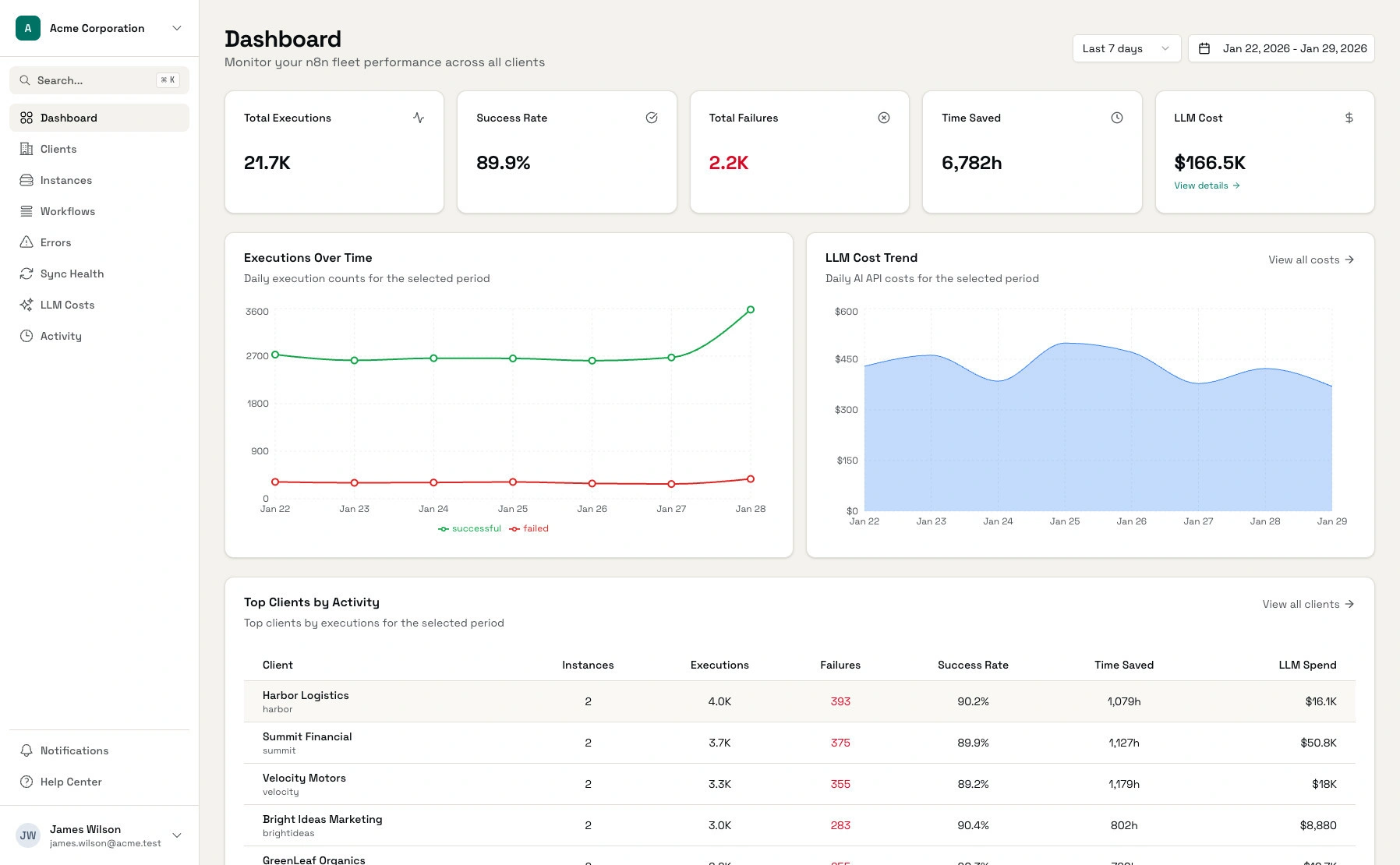
AI Agency Software
We have productized our own internal AI agency software – administrate.dev
Jan 31, 2026
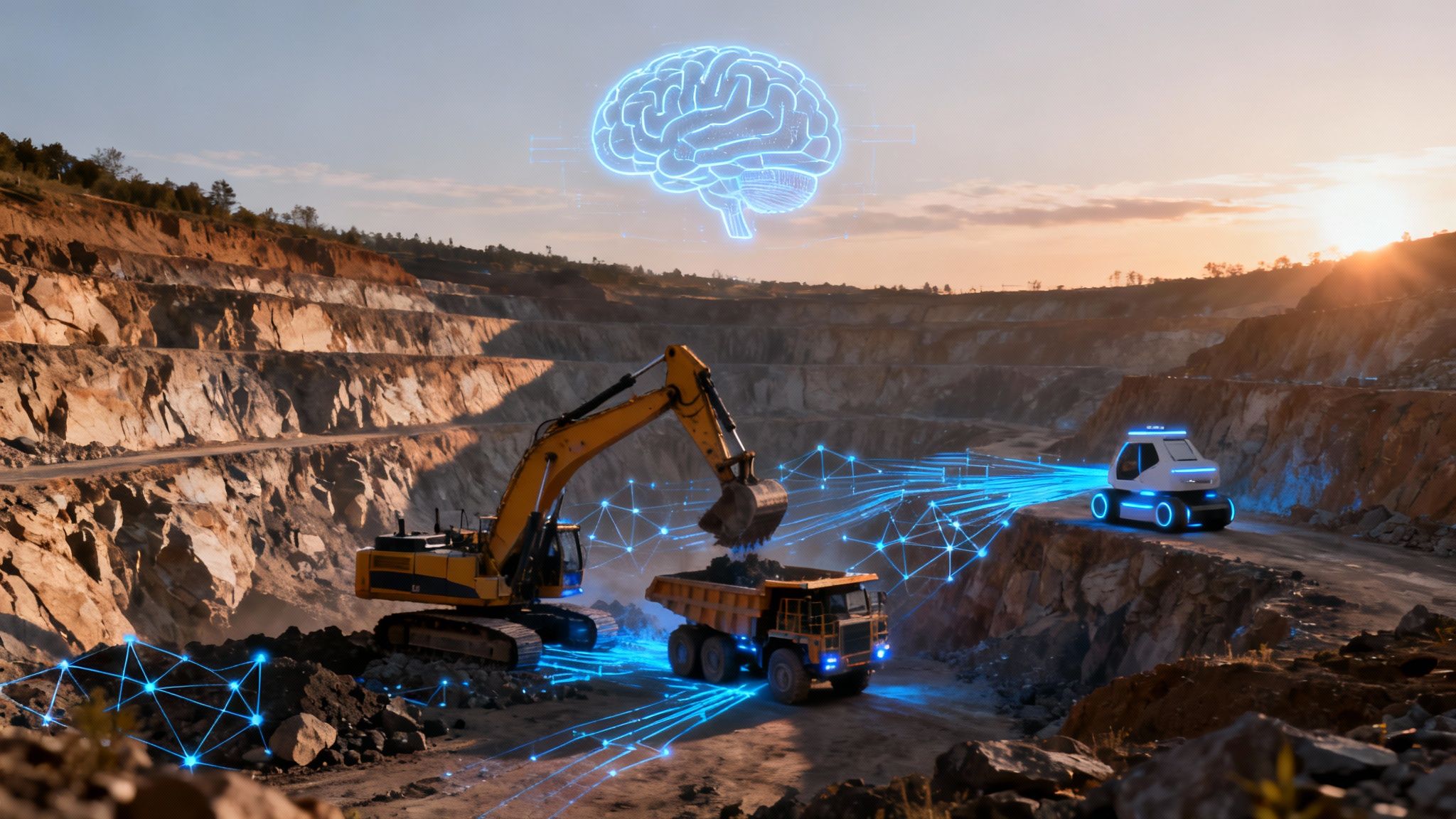
AI in Mining Uncovered: How Smart Tech Boosts Safety and Profit
Imagine having a partner for your operations team who never sleeps. A partner who can sift through endless streams of data from your drills, trucks, and sensors, spotting tiny clues that signal a million-dollar problem is just around the corner. That’s the real value of AI in mining. It is not about sci-fi robots; it […]
Jan 30, 2026
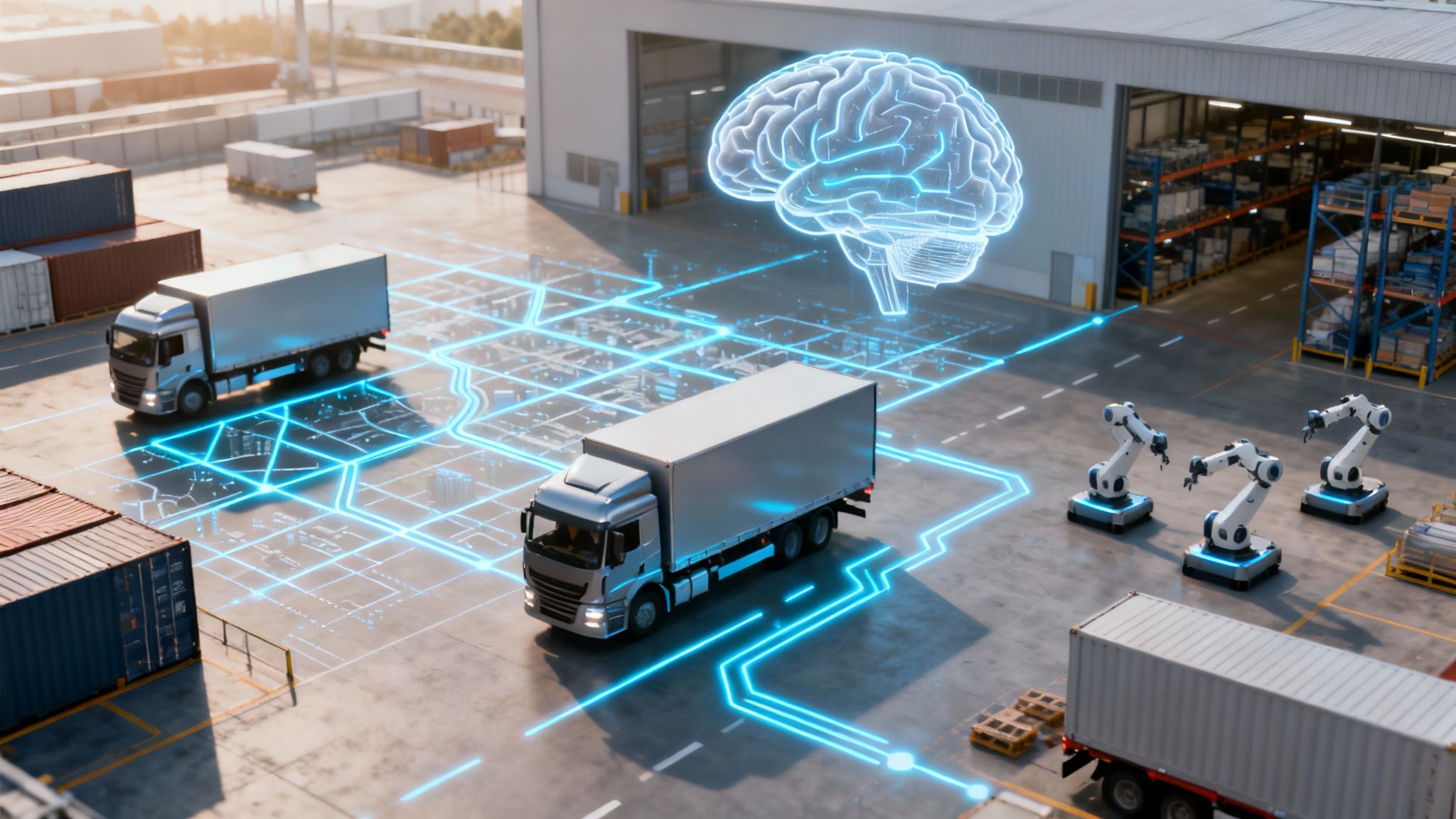
A Plain English Guide to AI in Logistics
Artificial intelligence in logistics is about giving your supply chain a brain. It is not about self-aware robots taking over the warehouse floor, but rather about using smart systems to make your entire operation more efficient, predictive, and resilient. Think of it as the ultimate co-pilot for your logistics team. It is an assistant that […]
Jan 22, 2026
Sick of reading about automation?
Book a free 15-minute intro call. We’ll talk through what you’re trying to automate and whether we’re a good fit.