Skip to content

From site data to finished report in minutes

AI report writing that turns structured job data into a finished, branded PDF, in your templates and your professional voice, and never overwrites a sentence a human has edited. In production for an Australian consultancy today, where reports that took hours now take minutes.

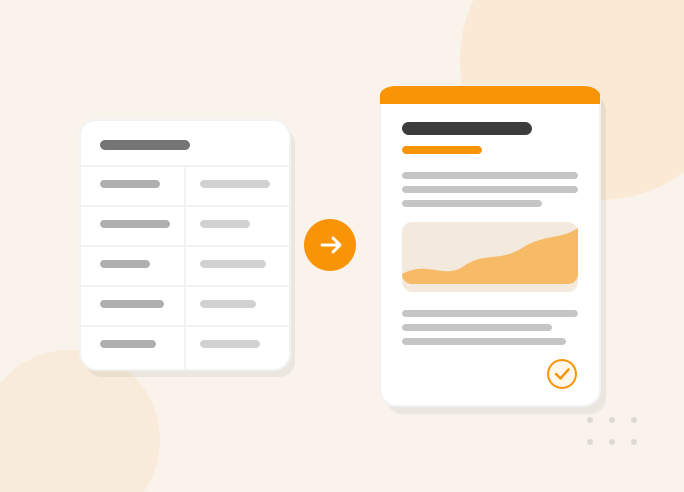
Illustration of structured job data becoming a finished branded report

The problem

The report is the product, and the bottleneck

In consulting, inspections and assessments, the deliverable is a document. The data capture takes an hour. The writing takes the evening. And most of that writing is the same professional language, assembled around different facts.

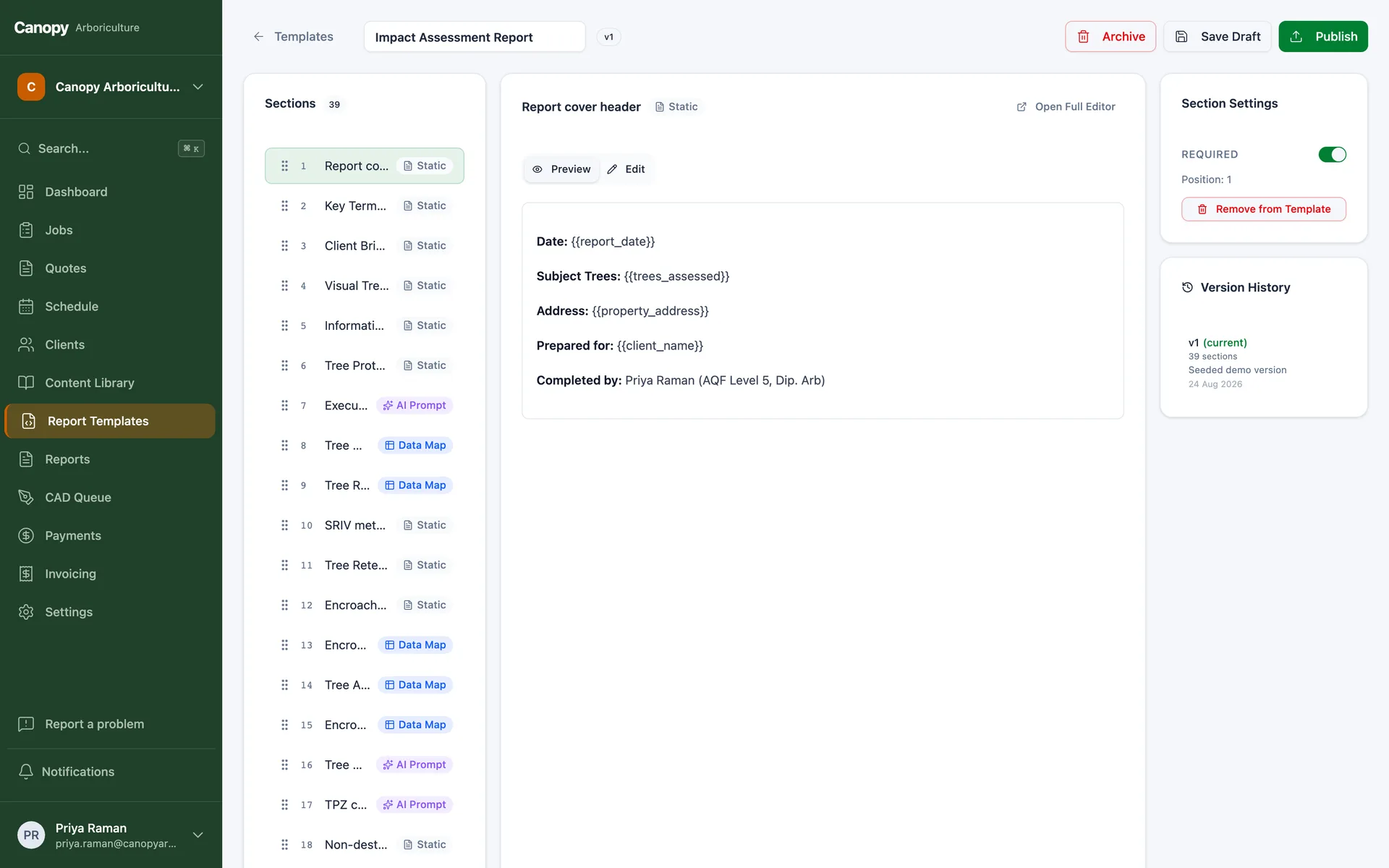
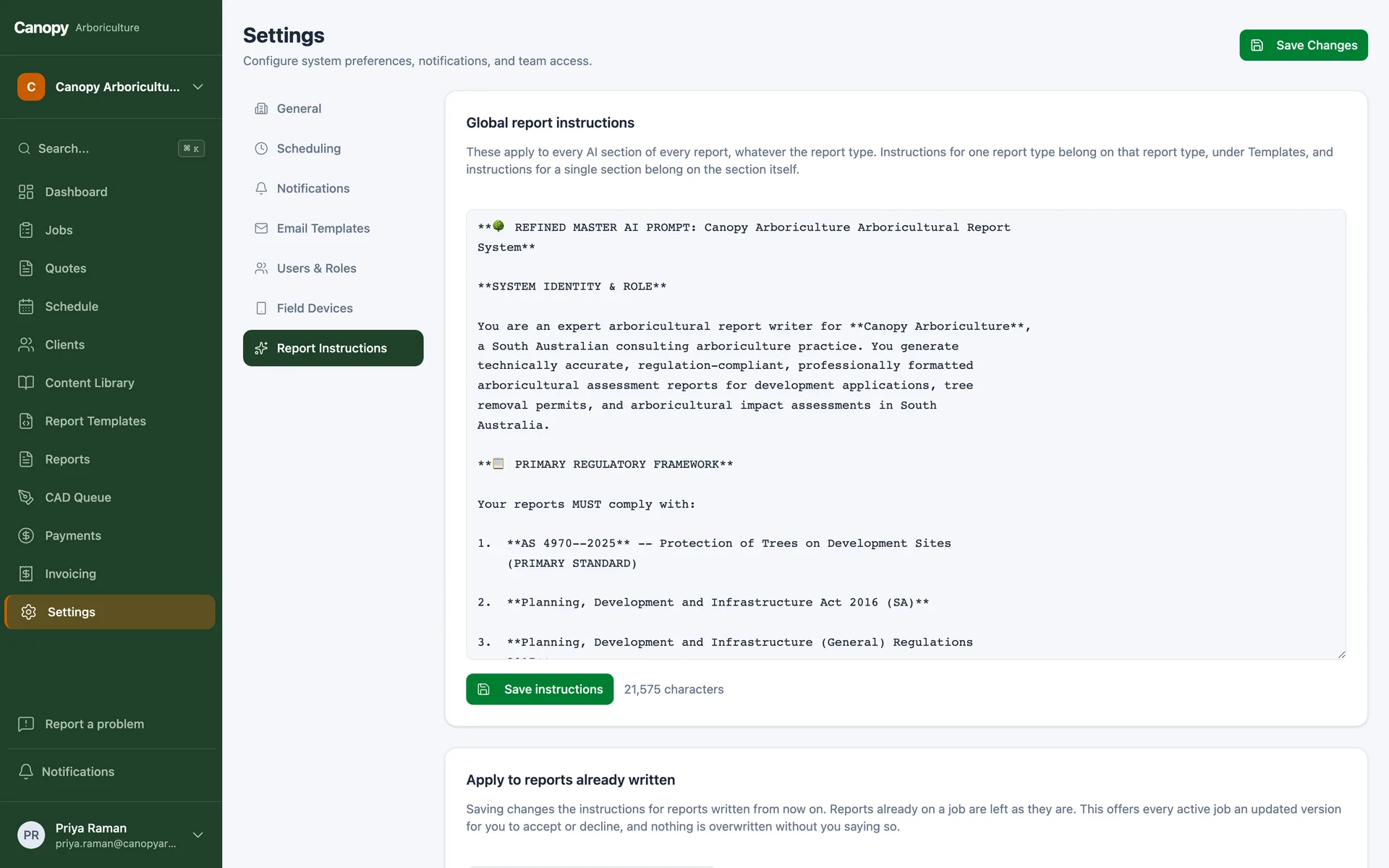
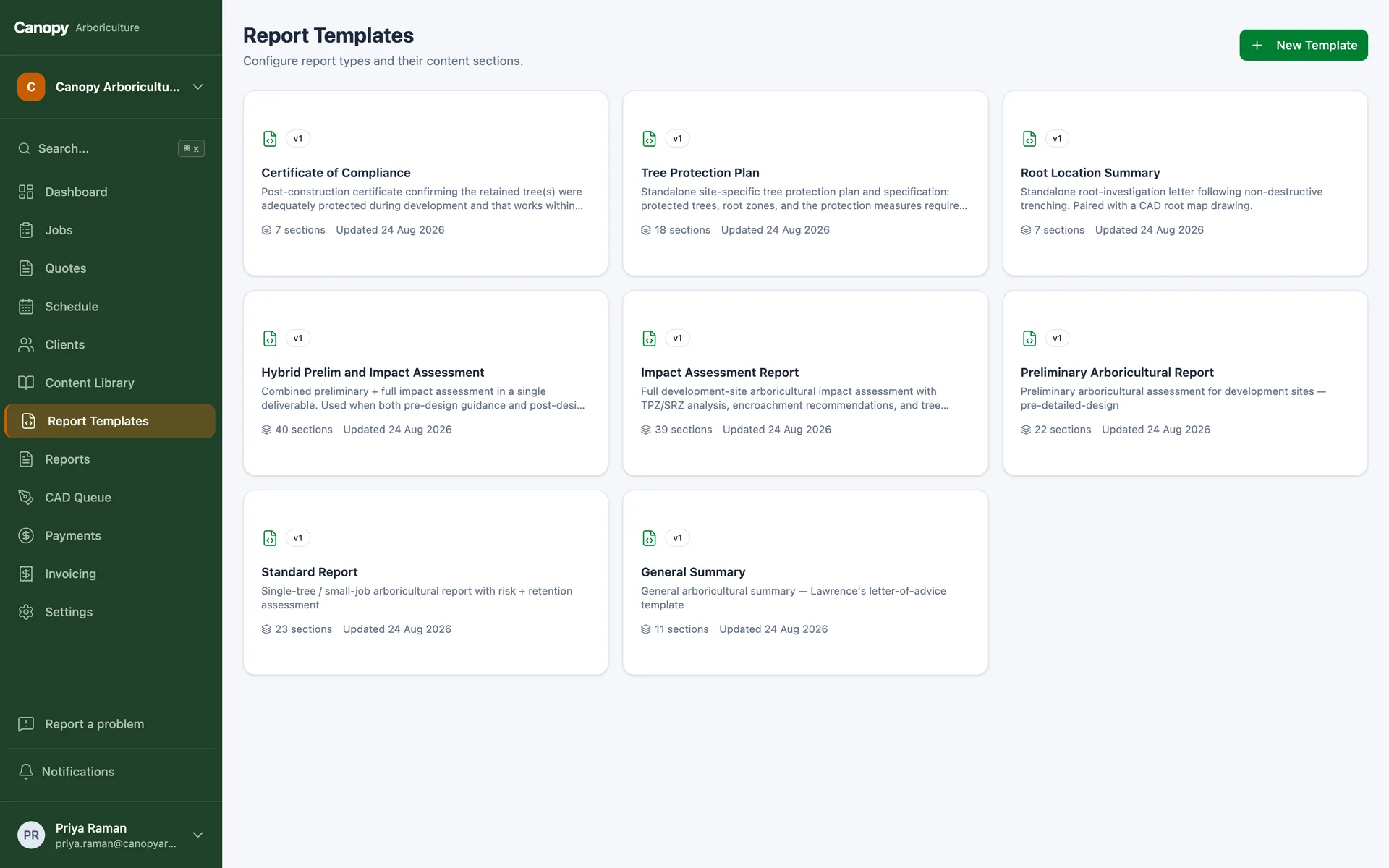
We build report engines from versioned templates your experts control. Fixed wording stays fixed. Data sections build their tables and maps from the job. Narrative sections are drafted by AI, grounded in the captured data with strict do-not-invent rules, so the draft reads like your firm on a good day.

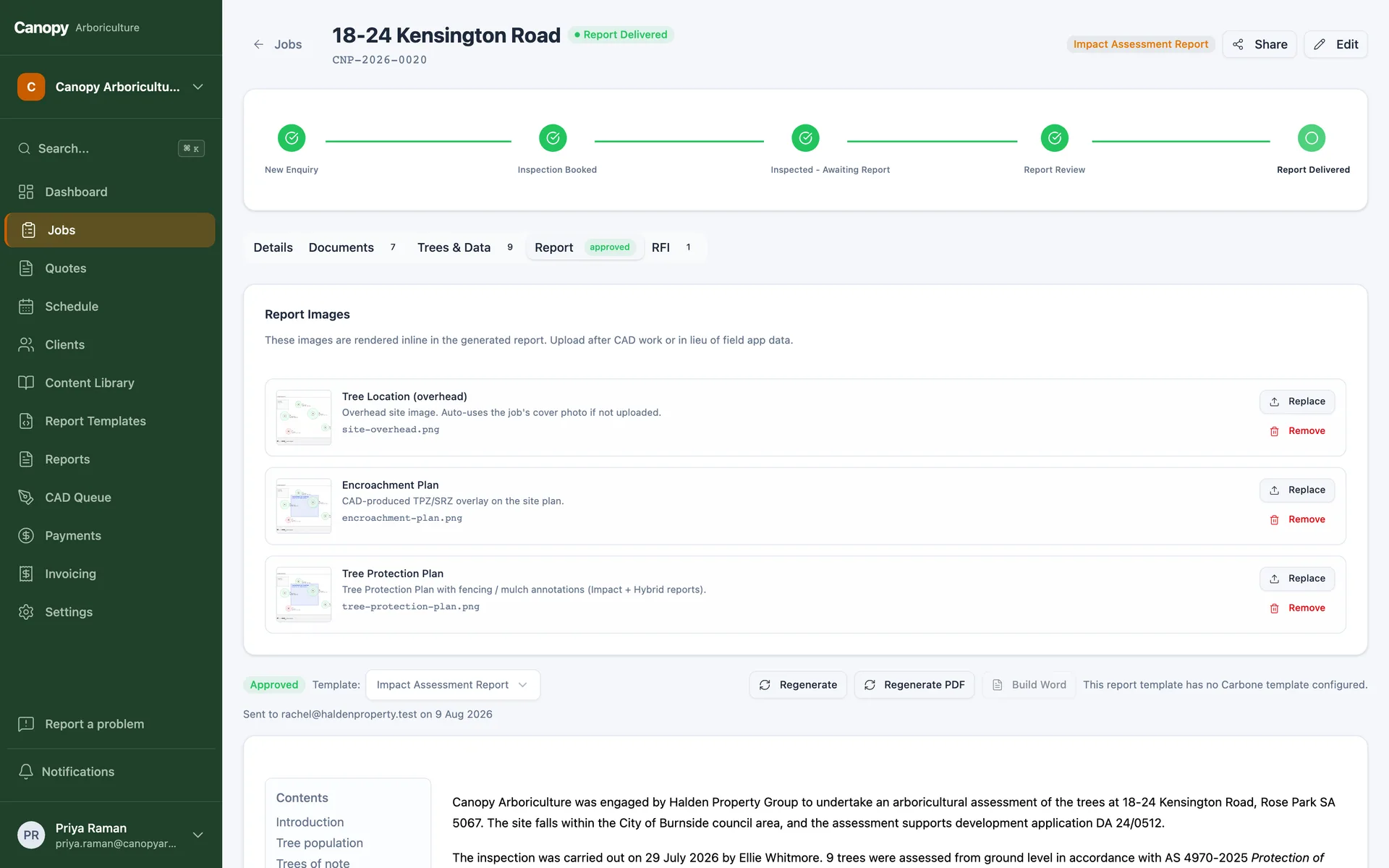
The part nobody else does is hand-edit protection. When data changes after an expert has polished the report, the system regenerates only the untouched sections, shows what it wants to change and why, and waits for approval. A machine never overwrites a human sentence. That single rule is why experts trust it.

This is a module of our custom ERP platform, not a standalone product. Start with just this module and it already sits on the full platform, accounts, security, admin and API included, so the rest of the system can arrive stage by stage, whenever you are ready.

What you get

Your report factory, with your name on it

Drafts in minutes, in your voice

Narrative sections are generated from the job's real data, in the register your templates define, with failures flagged loudly instead of shipped quietly.

Hand-edit protection

The system detects every sentence a human has touched and refuses to regenerate over it. Changes arrive as proposals to approve, not surprises to discover.

Templates with version control

Reports are built from reusable blocks with draft and published versions, change notes and rollback. Your wording is an asset, managed like one.

Data sections that build themselves

Tables, site maps and schedules render straight from captured data, so the numbers in the report are the numbers in the system, always.

Branded PDF, filed and versioned

One click renders the report with your covers, headers and page numbering, and files it against the job alongside every earlier version.

Follow-up letters too

When a council or client comes back with questions, the system drafts the reply letter grounded strictly in the issued report, never inventing new findings.

Proof

The build this comes from

Automating Report Generation for Field Services

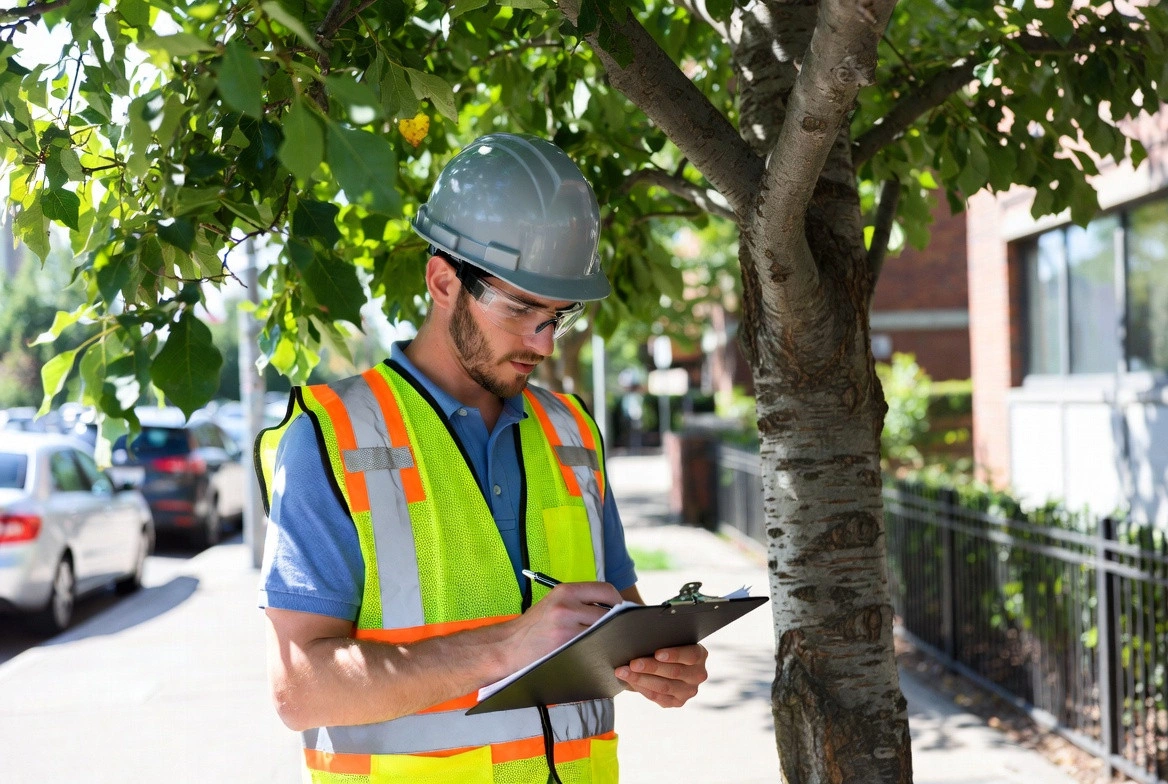
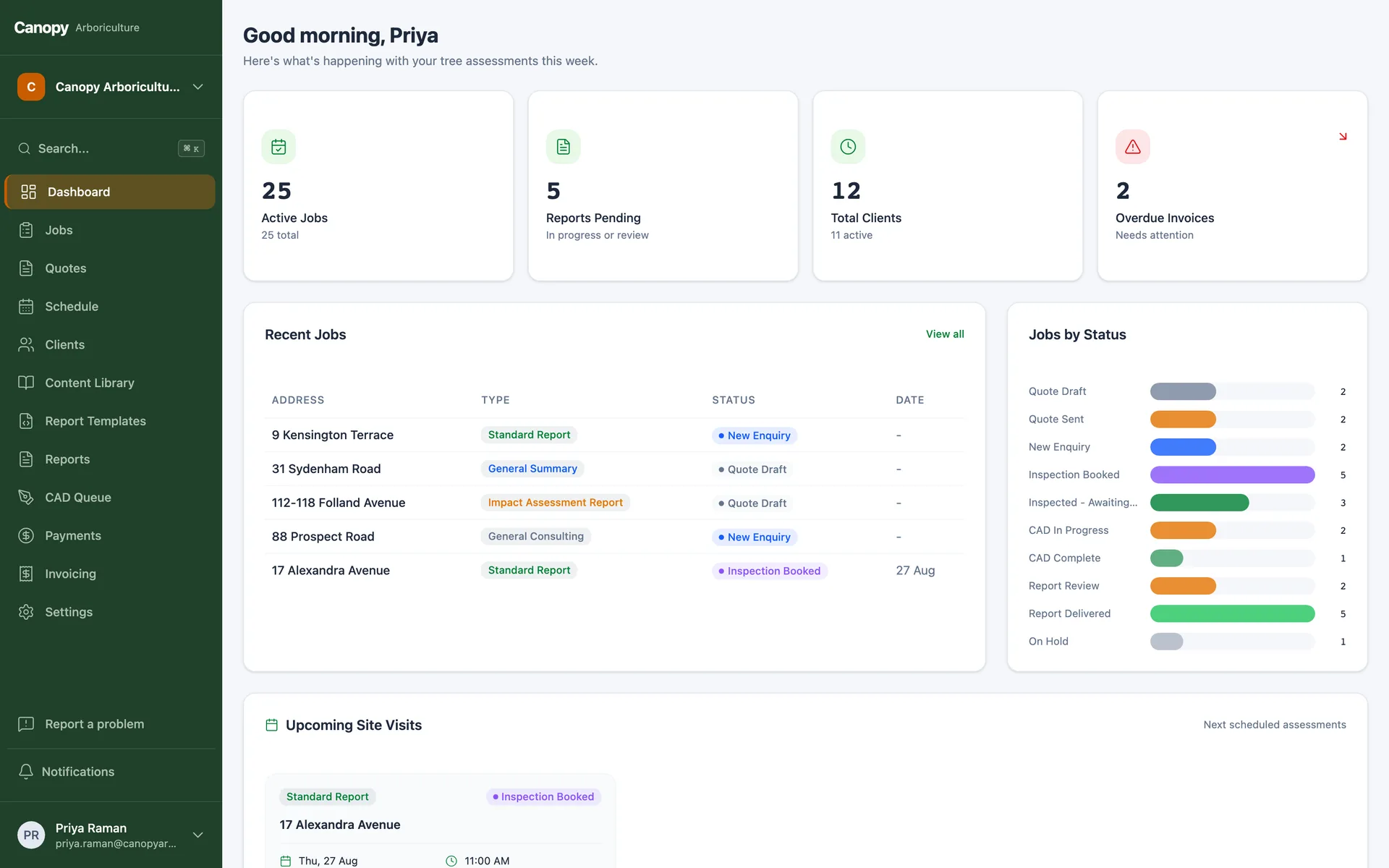
A consulting arborist in South Australia faced a manual report generation process that involved extensive cutting and pasting from Fulcrum into Word documents for four report types. Osher Digital implemented an automated workflow using webhooks, dynamic templating, and AI-assisted drafting, reducing manual efforts by over 80% and enabling the client to handle more jobs at higher prices.
AI native

Run it from Claude or ChatGPT

Every module ships on a platform with a built-in MCP server, which means AI assistants like Claude and ChatGPT can securely read and operate your system with the same permissions as a staff member. Ask where a job is up to, get a client summary before a call, or have tomorrow's follow-ups drafted, from the chat window you already use.

FAQs

AI report questions, answered

It is built not to. Generation is grounded in the job's captured data with explicit do-not-invent rules, uncertain sections fail visibly rather than guessing, and nothing reaches a client without an expert's review. The AI drafts. Your expert signs.

Get the evenings back

Book a free 15-minute call. Show us one report, and we'll tell you what a build costs.

Australian-hostedPrivacy Act compliantNDAs standard